
 Wildlife
of Vietnam
Little Bunting
Finches, Sparrows & Buntings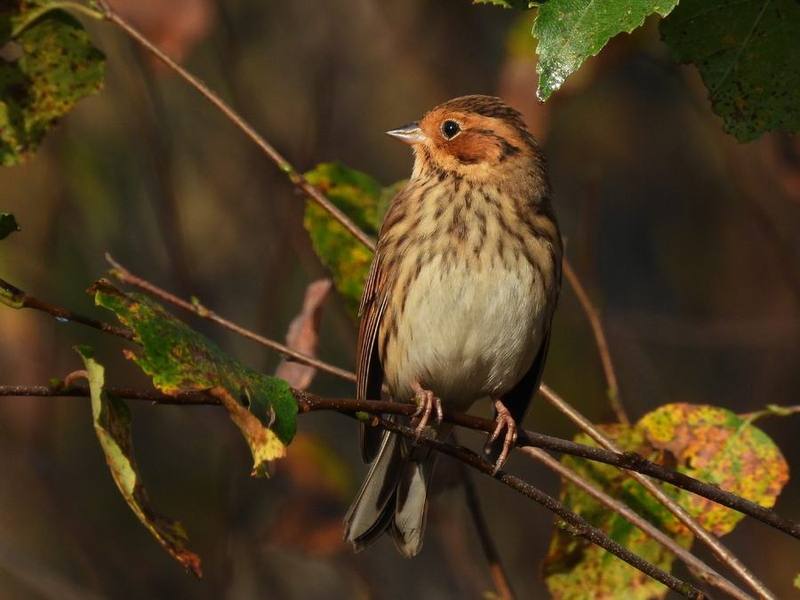
Photo: (c) Евгений Маринкин, some rights reserved (CC BY) · CC-BY (May be cropped or resized)
Schoeniclus pusillus
Also known as: Emberiza pusilla
Rare visitor: recorded only occasionally in this country
Basic stats
Diet
Seeds, or insects when feeding young
Habitat
Open coniferous woodland, often with birch or willow; in Bhutan, agricultural habitat mostly at 1,000–2,000m
Range
Breeds across the taiga from far north-east Europe to the Russian Far East; winters in northern India, southern China and northern south-east Asia
Clutch size
4–6 eggs in a tree nest
Size
12–14cm
The little bunting is a small bunting, 12 to 14cm long, with white underparts streaked dark on the breast and sides. With its chestnut face and white malar stripe it resembles a small female reed bunting, but has black crown stripes, a white eye-ring and a fine dark border to the rear of its chestnut cheeks (Wikipedia, general species account).
It breeds across the taiga of the far north-east of Europe and northern Eurosiberia to the Russian Far East, in open coniferous woodland, and is migratory, wintering in northern India, southern China and northern south-east Asia. In the mountains of Bhutan, where small numbers winter, it is typically found in agricultural habitat, mostly between 1,000 and 2,000m. It eats seeds, or insects when feeding young, and four to six eggs are laid in a tree nest.
Quick answers
- What does the Little Bunting eat?
- Seeds, or insects when feeding young
- What habitat does the Little Bunting live in?
- Open coniferous woodland, often with birch or willow; in Bhutan, agricultural habitat mostly at 1,000–2,000m
- Where is the Little Bunting found?
- Breeds across the taiga from far north-east Europe to the Russian Far East; winters in northern India, southern China and northern south-east Asia
- How many eggs does the Little Bunting lay?
- 4–6 eggs in a tree nest
- How big is the Little Bunting?
- 12–14cm
In Vietnam
GBIF holds 50 records of the Little Bunting from 4 protected areas in Vietnam, dated 1998 to 2024. Most come from Hoang Lien National Park (Sa Pa) and Phja Oac - Phja Den National Park.
Where it has been recorded
- Hoang Lien National Park (Sa Pa) 26 records, latest 2024
- Phja Oac - Phja Den National Park 12 records, latest 2023
- Cuc Phuong National Park 8 records, latest 2024
- Tam Dao National Park 4 records, latest 2003
Covered in our place guides: Hoang Lien National Park (Sa Pa), Cuc Phuong National Park.
Also in our other guides: Bhutan.
Records: GBIF occurrence data matched to park boundaries (© OpenStreetMap contributors, ODbL; Wikidata). Counts show recording effort, not how common the species is.