
 Wildlife
of Vietnam
Crested Bunting
Finches, Sparrows & Buntings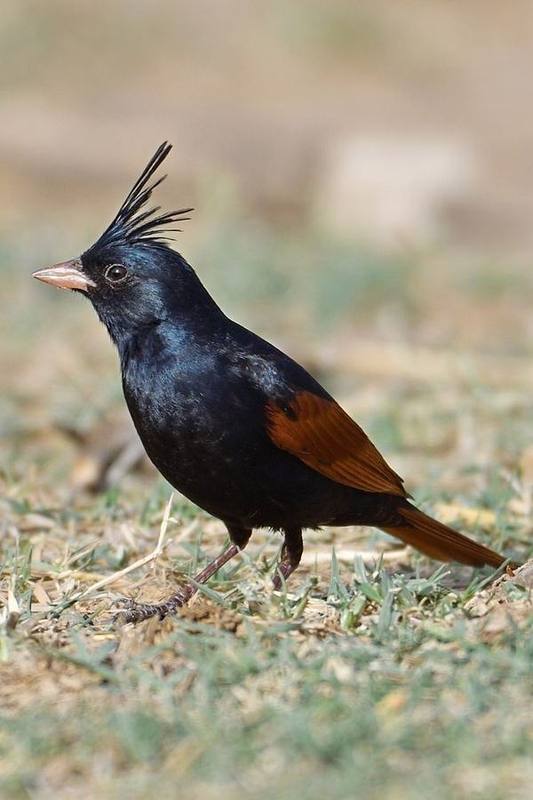
Photo: saydelah · CC BY 4.0 (May be cropped or resized)
Melophus lathami
Also known as: Emberiza lathami
Rare visitor: recorded only occasionally in this country
Basic stats
Habitat
Sings from atop tall plants in the breeding season; more gregarious in winter, flocking with finches, buntings and larks
Clutch size
3–4 white eggs with greenish to reddish spots, denser at the broad end
Size
Sparrow-sized
The crested bunting is sparrow-sized, with males having rufous wings and tail on a black body, and females less contrastingly dull brown; both sexes have the distinctive crest. Males have a prominent crest, a yellowish beak and black body plumage contrasting with the rufous flight feathers; females have a shorter crest, dull olive-brown plumage with dark streaks, cinnamon-fringed wing and tail feathers and a grey beak (Wikipedia, general species account).
It was formerly placed in the monotypic genus Melophus because of its crest, unique among buntings, until DNA studies showed it nested within Emberiza. Non-breeding males are buffish grey. It becomes more gregarious in winter, forming flocks that sometimes forage with other finches, buntings and larks, and males sing from atop tall plants in the breeding season. The clutch is three or four white, spotted eggs. The source read does not name Bhutan.
Quick answers
- What habitat does the Crested Bunting live in?
- Sings from atop tall plants in the breeding season; more gregarious in winter, flocking with finches, buntings and larks
- How many eggs does the Crested Bunting lay?
- 3–4 white eggs with greenish to reddish spots, denser at the broad end
- How big is the Crested Bunting?
- Sparrow-sized
In Vietnam
GBIF holds 19 records of the Crested Bunting from 3 protected areas in Vietnam, dated 1998 to 2024. Most come from Hoang Lien National Park (Sa Pa) and Phja Oac - Phja Den National Park.
Where it has been recorded
- Hoang Lien National Park (Sa Pa) 13 records, latest 2024
- Phja Oac - Phja Den National Park 3 records, latest 2022
- Cat Ba National Park 3 records, latest 2019
Covered in our place guides: Hoang Lien National Park (Sa Pa).
Seen on trips we host
- Vietnam scheduled Bird Tour Asia, 2014
Also in our other guides: Bhutan.
Records: GBIF occurrence data matched to park boundaries (© OpenStreetMap contributors, ODbL; Wikidata). Counts show recording effort, not how common the species is.