
 Wildlife
of Vietnam
Blue-and-white Flycatcher
Thrushes, Chats & Flycatchers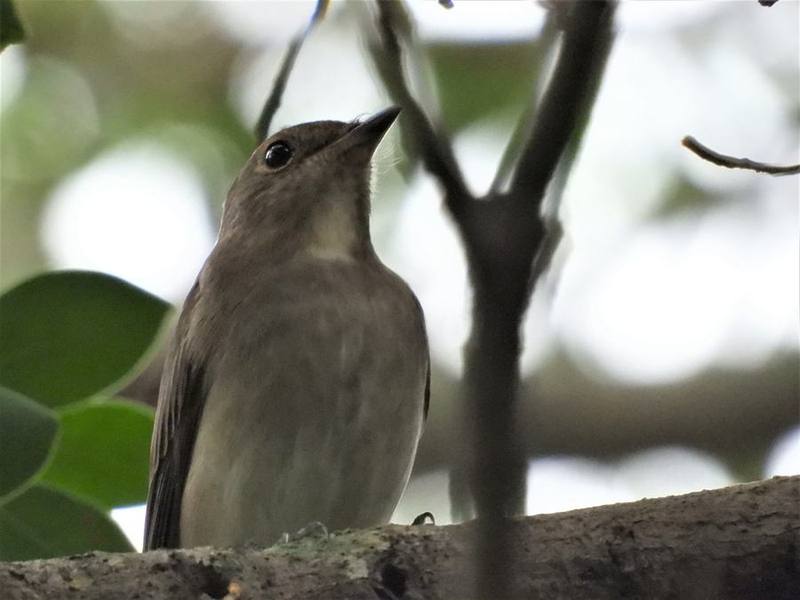
Photo: Stephen Matthews · CC0
Cyanoptila cyanomelana
Rare visitor: recorded only occasionally in this country
Basic stats
Diet
Invertebrates (SoIB guild)
Habitat
Forest and plantation
Range
Breeds in Japan, Korea, parts of north-eastern China and the Russian Far East
Clutch size
4–6 eggs
Incubation period
14–15 days, by the female alone
Size
16–17cm
Weight
25g on average
The blue-and-white flycatcher, also known as the Japanese flycatcher, is a large flycatcher, 16–17 cm long and 25 g on average, with a striking plumage pattern. The male is deep cobalt blue with black on the face down to the upper breast and flanks, the rest of the underside white, and a prominent white patch at the base of the outer tail feathers; immature males have the adult male's blue wings but are otherwise brown like females. The female is smaller on average, with the head, face and most of the upperparts grey-brown and pale beige-white on the lower middle throat (Wikipedia, general species account).
It is a migratory songbird that breeds in Japan, Korea and parts of north-eastern China and the Russian Far East, the breeding season extending from late May to early August. The clutch is four to six eggs, incubated by the female alone for 14 to 15 days, and the song is a short, melancholic series of whistles. The cached account does not describe its Indian range. SoIB 2023 lists it as a winter migrant of forest and plantation that eats invertebrates, without a priority category (Wikipedia, general species account; SoIB 2023).
Quick answers
- What does the Blue-and-white Flycatcher eat?
- Invertebrates (SoIB guild)
- What habitat does the Blue-and-white Flycatcher live in?
- Forest and plantation
- Where is the Blue-and-white Flycatcher found?
- Breeds in Japan, Korea, parts of north-eastern China and the Russian Far East
- How many eggs does the Blue-and-white Flycatcher lay?
- 4–6 eggs
- How long are the eggs of the Blue-and-white Flycatcher incubated?
- 14–15 days, by the female alone
- How big is the Blue-and-white Flycatcher?
- 16–17cm
- How much does the Blue-and-white Flycatcher weigh?
- 25g on average
In Vietnam
GBIF holds 132 records of the Blue-and-white Flycatcher from 11 protected areas in Vietnam, dated 1993 to 2024. Most come from Phong Nha-Ke Bang National Park and Cat Tien National Park.
Where it has been recorded
- Phong Nha-Ke Bang National Park 34 records, latest 2024
- Cat Tien National Park 33 records, latest 2024
- Da Lat Plateau & Bidoup-Nui Ba 19 records, latest 2024
- Cuc Phuong National Park 14 records, latest 2016
- Ngoc Linh Nature Reserve 7 records, latest 2023
- Tam Dao National Park 6 records, latest 2013
- Bach Ma National Park 5 records, latest 2024
- Ba Vi National Park 5 records, latest 2024
Plus 3 more sites.
Covered in our place guides: Phong Nha-Ke Bang National Park, Cat Tien National Park, Da Lat Plateau & Bidoup-Nui Ba, Cuc Phuong National Park, Bach Ma National Park, Hoang Lien National Park (Sa Pa).
Also in our other guides: India, Singapore, Sulawesi, Sumatra, Thailand.
Records: GBIF occurrence data matched to park boundaries (© OpenStreetMap contributors, ODbL; Wikidata). Counts show recording effort, not how common the species is.