
 Wildlife
of Vietnam
Taiga Flycatcher
Thrushes, Chats & Flycatchers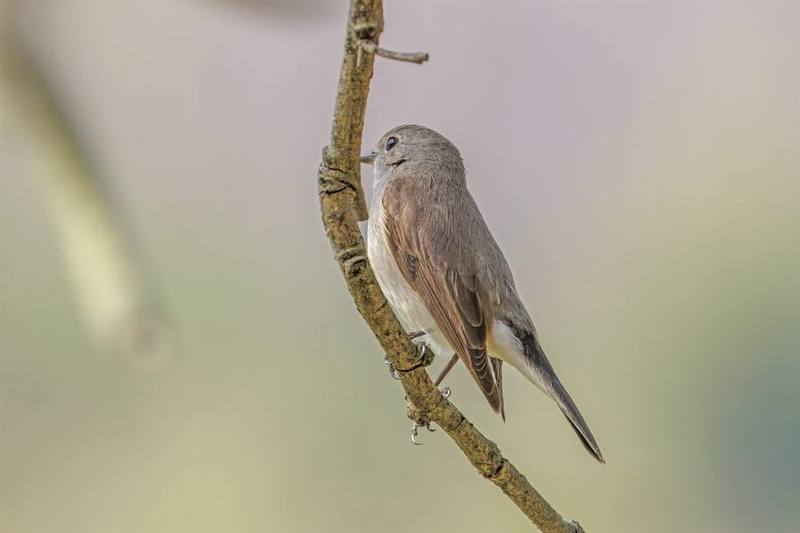
Photo: Charles J. Sharp · CC BY-SA 4.0 (May be cropped or resized)
Ficedula albicilla
Rare visitor: recorded only occasionally in this country
Basic stats
Diet
Invertebrates (SoIB guild)
Habitat
Forest and plantation
Range
Breeds in northern Eurasia from eastern Russia to Siberia and Mongolia; winters in South and Southeast Asia: Bangladesh, Bhutan, India, Cambodia, Laos, Myanmar, Nepal, Malaysia, Thailand, China, Vietnam and Japan
The taiga, or red-throated, flycatcher is a migratory bird of the flycatcher family, formerly considered a subspecies of the red-breasted flycatcher. The female has brown upperparts and a blackish tail flanked by white, with a buffish breast and mostly white underparts; the male has blue-tinged grey ear coverts and neck sides, and breeding males have an orange-red throat. Unlike the taiga flycatcher, the female red-breasted flycatcher has a brown tail, and the red in breeding males extends to the breast (Wikipedia, general species account).
It breeds in northern Eurasia from eastern Russia to Siberia and Mongolia and is a winter visitor to South and Southeast Asia, including Bangladesh, Bhutan, India, Cambodia, Laos, Myanmar, Nepal, Malaysia, Thailand, China, Vietnam and Japan. The genus name is Latin for a small fig-eating bird, supposed to change into the blackcap in winter. SoIB 2023 lists it as a winter migrant of forest and plantation that eats invertebrates, without a priority category (Wikipedia, general species account; SoIB 2023).
Quick answers
- What does the Taiga Flycatcher eat?
- Invertebrates (SoIB guild)
- What habitat does the Taiga Flycatcher live in?
- Forest and plantation
- Where is the Taiga Flycatcher found?
- Breeds in northern Eurasia from eastern Russia to Siberia and Mongolia; winters in South and Southeast Asia: Bangladesh, Bhutan, India, Cambodia, Laos, Myanmar, Nepal, Malaysia, Thailand, China, Vietnam and Japan
In Vietnam
GBIF holds 632 records of the Taiga Flycatcher from 14 protected areas in Vietnam, dated 1987 to 2026. Most come from Cat Tien National Park and Cuc Phuong National Park.
Where it has been recorded
- Cat Tien National Park 320 records, latest 2024
- Cuc Phuong National Park 90 records, latest 2026
- Da Lat Plateau & Bidoup-Nui Ba 65 records, latest 2024
- Yok Don National Park 34 records, latest 2022
- Phong Nha-Ke Bang National Park 28 records, latest 2023
- Bach Ma National Park 25 records, latest 2022
- Van Long Nature Reserve 15 records, latest 2024
- Tam Dao National Park 11 records, latest 2024
Plus 6 more sites.
Covered in our place guides: Cat Tien National Park, Cuc Phuong National Park, Da Lat Plateau & Bidoup-Nui Ba, Yok Don National Park, Phong Nha-Ke Bang National Park, Bach Ma National Park.
Also in our other guides: India, Malaysia, Nepal, Singapore, Thailand.
Records: GBIF occurrence data matched to park boundaries (© OpenStreetMap contributors, ODbL; Wikidata). Counts show recording effort, not how common the species is.