
 Wildlife
of Vietnam
Rufous Treepie
Crows, Drongos, Orioles & Shrikes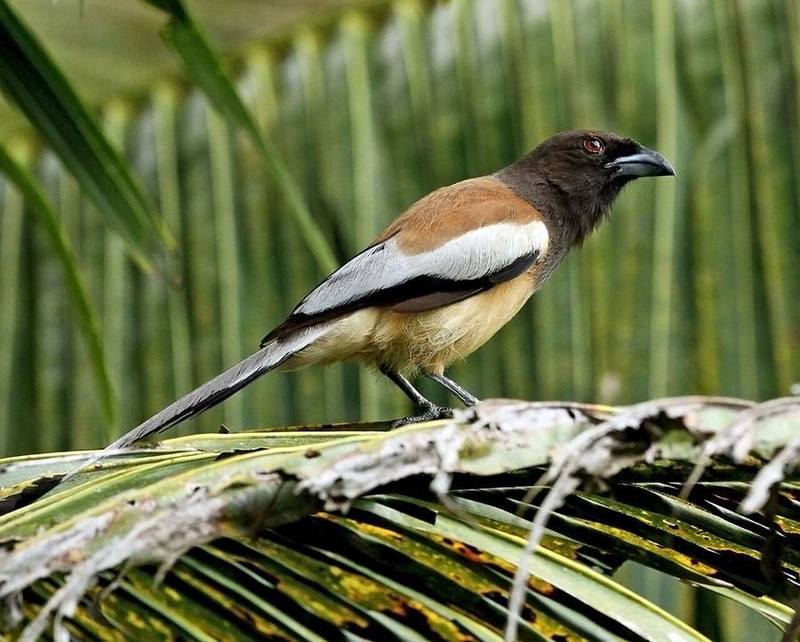
Photo: Manjith Kainickara from Dallas, Texas, USA · CC BY-SA 2.0 (May be cropped or resized)
Dendrocitta vagabunda
Rare visitor: recorded only occasionally in this country
Basic stats
Diet
Invertebrates, small reptiles, eggs and young of birds, seeds, fruits and nectar
Habitat
Shallow nest in trees and bushes; migrates seasonally between elevations in the Garhwal Himalayas
Range
Indian subcontinent and adjoining parts of Southeast Asia
Clutch size
Usually 3–5 eggs
The rufous treepie is a long-tailed member of the crow family with loud musical calls that make it very conspicuous. The sexes are alike: the body is cinnamon with a black head, the long graduated tail is bluish grey tipped in black, and the wing has a white patch. The only confusable species is the grey treepie, which lacks the bright rufous mantle (Wikipedia, general species account).
It is primarily a tree-living omnivore, feeding on invertebrates, small reptiles, the eggs and young of birds, seeds, fruits and nectar. A bob-o-link or 'ko-tree' call is most common, and its local name kotri comes from it. The breeding season in India is April to June, with a shallow nest in trees and bushes and usually three to five eggs. The account opened does not name Bhutan.
Quick answers
- What does the Rufous Treepie eat?
- Invertebrates, small reptiles, eggs and young of birds, seeds, fruits and nectar
- What habitat does the Rufous Treepie live in?
- Shallow nest in trees and bushes; migrates seasonally between elevations in the Garhwal Himalayas
- Where is the Rufous Treepie found?
- Indian subcontinent and adjoining parts of Southeast Asia
- How many eggs does the Rufous Treepie lay?
- Usually 3–5 eggs
In Vietnam
GBIF holds 69 records of the Rufous Treepie from 2 protected areas in Vietnam, dated 2001 to 2025. Most come from Yok Don National Park and Lo Go - Xa Mat National Park.
Where it has been recorded
- Yok Don National Park 65 records, latest 2025
- Lo Go - Xa Mat National Park 4 records, latest 2001
Covered in our place guides: Yok Don National Park.
Also in our other guides: Bhutan.
Records: GBIF occurrence data matched to park boundaries (© OpenStreetMap contributors, ODbL; Wikidata). Counts show recording effort, not how common the species is.