
 Wildlife
of Vietnam
Pied Bush Chat
Thrushes, Chats & Flycatchers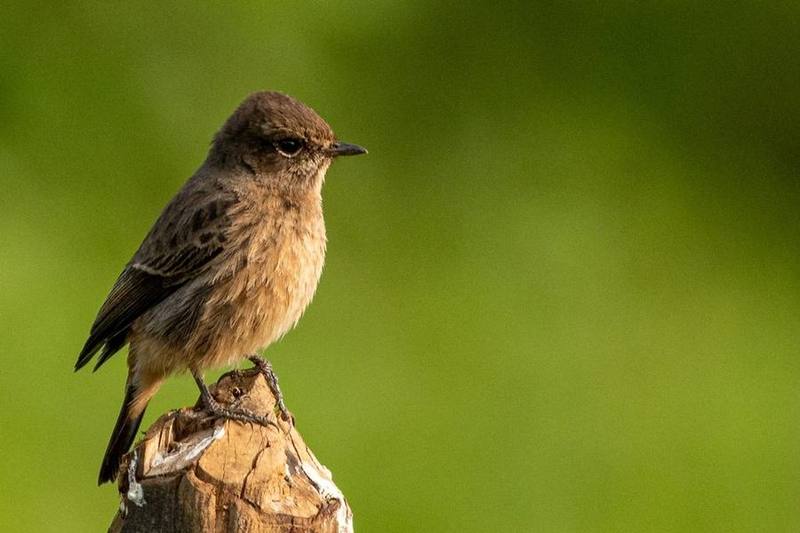
Photo: Harshad Sharma · CC BY 4.0 (May be cropped or resized)
Saxicola caprata
Rare visitor: recorded only occasionally in this country
Basic stats
Diet
Insects, mostly taken from the ground
Habitat
Open country, scrub and grassland
Range
West and Central Asia to the Indian subcontinent and Southeast Asia
Size
About 13cm
The pied bush chat is a small, dumpy chat about 13cm long with an upright stance, slightly smaller than the Siberian stonechat. The male is black except for a white rump, wing patch and lower belly, with a dark eye and black bill and legs; the extent of white varies among populations. The female is drab brown and slightly streaked, and juveniles look scaly below. About sixteen subspecies are recognised, many of them on islands (Wikipedia, general species account).
It is a familiar bird of countryside, open scrub and grassland, perching on the tops of short thorn trees and shrubs to watch for insects, which it takes mainly from the ground. It nests in cavities in stone walls or holes in banks, lining the nest with grass and animal hair. Like other chats it is now placed among the Old World flycatchers. SoIB 2023 lists it as resident in India with movements within the country and a very large range, finds its trends stable, and rates it a Low conservation priority (Wikipedia, general species account; SoIB 2023).
Quick answers
- What does the Pied Bush Chat eat?
- Insects, mostly taken from the ground
- What habitat does the Pied Bush Chat live in?
- Open country, scrub and grassland
- Where is the Pied Bush Chat found?
- West and Central Asia to the Indian subcontinent and Southeast Asia
- How big is the Pied Bush Chat?
- About 13cm
In Vietnam
GBIF holds 299 records of the Pied Bush Chat from 4 protected areas in Vietnam, dated 1993 to 2024. Most come from Cat Tien National Park and Dong Nai Culture and Nature Reserve.
Where it has been recorded
- Cat Tien National Park 284 records, latest 2024
- Dong Nai Culture and Nature Reserve 6 records, latest 2024
- Yok Don National Park 5 records, latest 2023
- Da Lat Plateau & Bidoup-Nui Ba 4 records, latest 2024
Covered in our place guides: Cat Tien National Park, Yok Don National Park, Da Lat Plateau & Bidoup-Nui Ba.
Also in our other guides: India, Nepal.
Records: GBIF occurrence data matched to park boundaries (© OpenStreetMap contributors, ODbL; Wikidata). Counts show recording effort, not how common the species is.