
 Wildlife
of Vietnam
Green Sandpiper
Shorebirds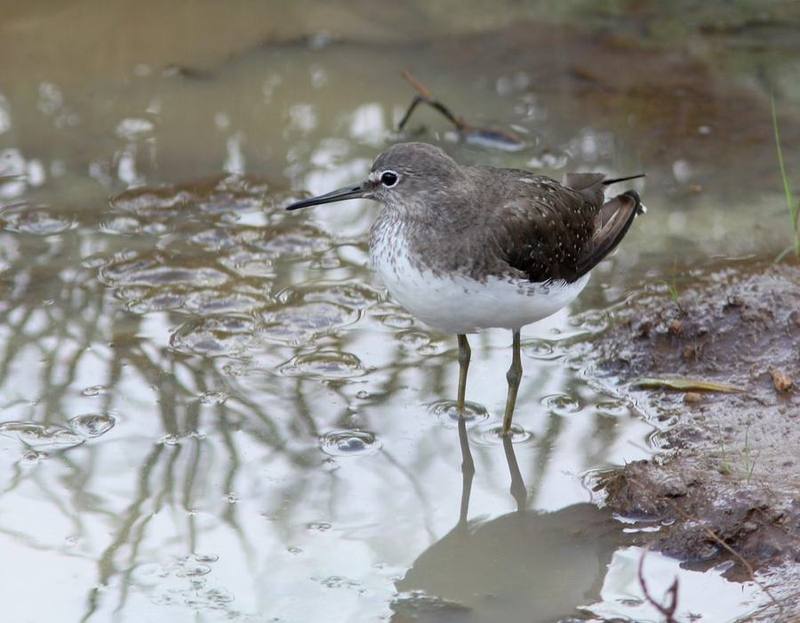
Photo: Tero Linjama · CC0 1.0
Tringa ochropus
Rare visitor: recorded only occasionally in this country
Basic stats
Diet
Small invertebrates picked from mud at the edges of ponds
Habitat
Freshwater, including sites too small for other waders
Range
Breeds across subarctic Europe and the Palearctic; winters in southern Europe, the Indian subcontinent, Southeast Asia and tropical Africa
The green sandpiper is a somewhat plump wader with a dark greenish-brown back and wings, a greyish head and breast and otherwise white underparts. The back is spotted white, most heavily in breeding adults and less in winter and young birds. The legs and short bill are dark green. In flight the wings are dark above and below with a brilliant white rump, a feature that reliably separates it from the slightly smaller but similar solitary sandpiper of North America. Its flight call is a characteristic three-note whistle. (Wikipedia, general species account)
The species breeds across subarctic Europe and east across the Palearctic, and it is migratory, wintering in southern Europe, the Indian subcontinent, Southeast Asia and tropical Africa. Unlike most waders it nests in trees. It is very much a bird of fresh water and is often found at sites too restricted for other waders, which prefer a clear all-round view. It works steadily around the edges of its pond, picking small invertebrates off the mud, and is not gregarious, though small numbers sometimes gather. (Wikipedia, general species account)
Quick answers
- What does the Green Sandpiper eat?
- Small invertebrates picked from mud at the edges of ponds
- What habitat does the Green Sandpiper live in?
- Freshwater, including sites too small for other waders
- Where is the Green Sandpiper found?
- Breeds across subarctic Europe and the Palearctic; winters in southern Europe, the Indian subcontinent, Southeast Asia and tropical Africa
In Vietnam
GBIF holds 100 records of the Green Sandpiper from 7 protected areas in Vietnam, dated 1986 to 2024. Most come from Cat Tien National Park and Bach Ma National Park.
Where it has been recorded
- Cat Tien National Park 69 records, latest 2022
- Bach Ma National Park 12 records, latest 2014
- Phong Nha-Ke Bang National Park 5 records, latest 2023
- Van Long Nature Reserve 5 records, latest 2024
- Da Lat Plateau & Bidoup-Nui Ba 3 records, latest 1992
- Yok Don National Park 3 records, latest 2014
- Xuan Lien National Park 3 records, latest 2013
Covered in our place guides: Cat Tien National Park, Bach Ma National Park, Phong Nha-Ke Bang National Park, Van Long Nature Reserve, Da Lat Plateau & Bidoup-Nui Ba, Yok Don National Park.
Also in our other guides: Mongolia.
Records: GBIF occurrence data matched to park boundaries (© OpenStreetMap contributors, ODbL; Wikidata). Counts show recording effort, not how common the species is.